
A good education should prepare a child not only to pass examinations, but also to face life with confidence. At Uganda Buddhist Centre schools, that belief is being put into practice through hands-on vocational training that equips students with practical skills for self-reliance, creativity, and service.
During the first term of the 2026 academic year, students took part in DIT and practical skills activities including tailoring, liquid soap and detergent making, briquette production, bakery-related learning, and creative craft work. These sessions gave learners the opportunity to work with their hands, think creatively, follow instructions, solve problems, and produce useful items.
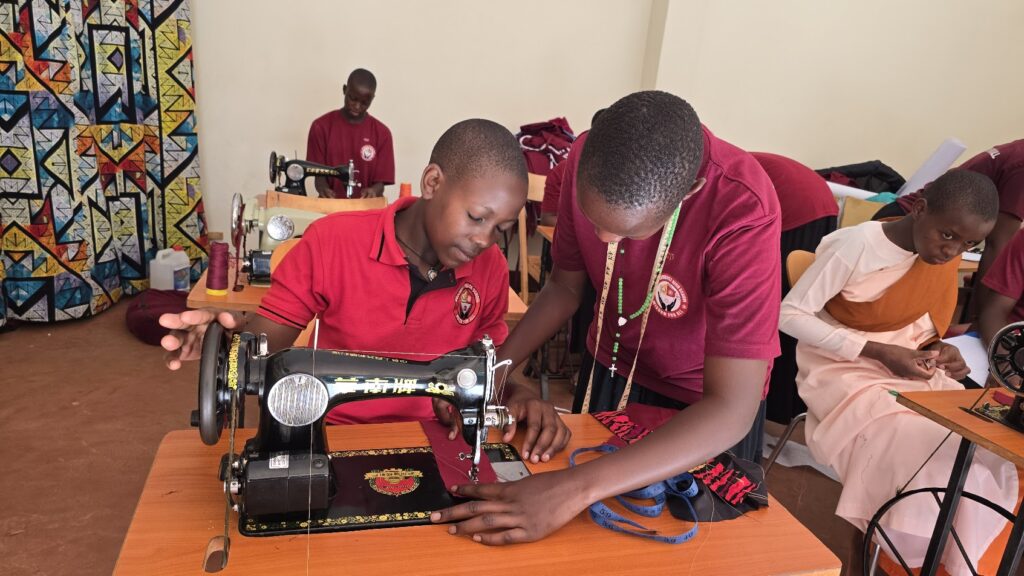
In the tailoring room, students learned how to use sewing machines, measure fabric, and handle materials with care. In detergent-making sessions, they learned how everyday products can be created through skill, accuracy, teamwork, and practical application of classroom knowledge from chemistry, biology, physics, and general science. What they learn in theory becomes visible through practical production.
Briquette production offered another powerful lesson: education can also respond to the environmental challenges facing our world. As climate change, deforestation, pollution, poor waste management, and rising temperatures continue to affect communities, students are being introduced to practical ways of protecting the environment. Through briquette-making, learners begin to understand alternative energy solutions and the importance of reducing pressure on trees used for firewood and charcoal.
This environmental education does not stop in the classroom. Uganda Buddhist Centre schools continue to encourage learners to preserve and conserve the environment through tree planting, community clean-up activities, and responsible waste management. During each term, the schools create time for students to go into the surrounding community, collect plastics and polythene, clean shared spaces, and raise awareness about keeping the environment clean. These activities help students understand that caring for the environment is not only a school lesson, but a responsibility to the wider community and future generations.
The display of finished items, including detergents, handwash, bags, and handmade crafts, showed that these lessons are not theoretical. They produce real results. Students are learning that knowledge can become a product, a service, a solution, and even a future livelihood.
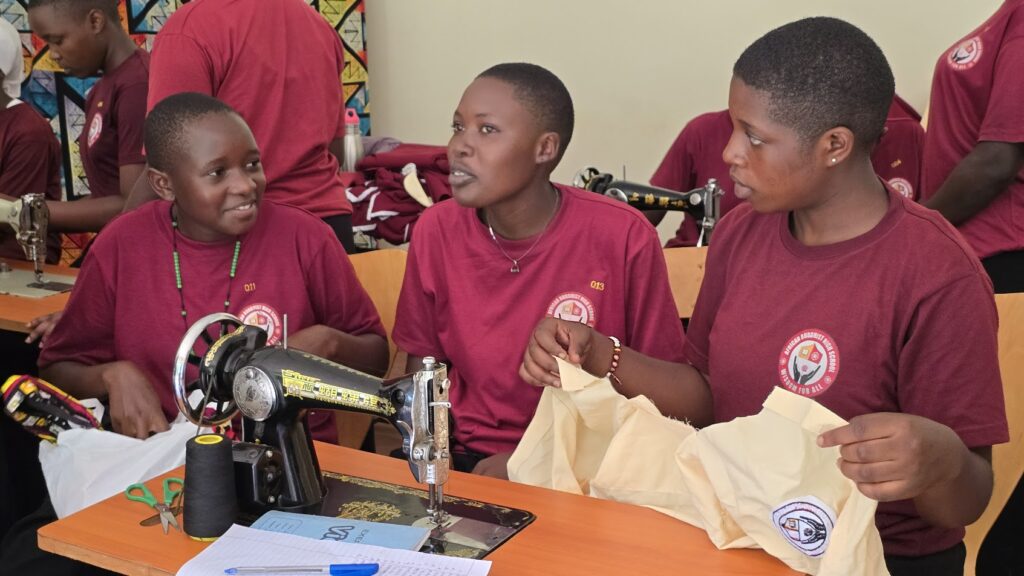
For many young people, such skills can become a source of future independence. A student who learns tailoring may one day repair clothes at home, start a small business, or support others in the community. A learner who understands product-making begins to see that entrepreneurship is possible. A child who participates in briquette production begins to connect education with environmental responsibility, climate awareness, and practical community service.
This is where your support has lasting impact. It does not only keep students in school; it helps equip them with skills that can support self-reliance, creativity, environmental stewardship, and future livelihoods.
At Uganda Buddhist Centre schools, practical education is giving students something powerful: the ability to imagine themselves as capable creators of their own future, and responsible caretakers of the world around them.